Miscellaneous

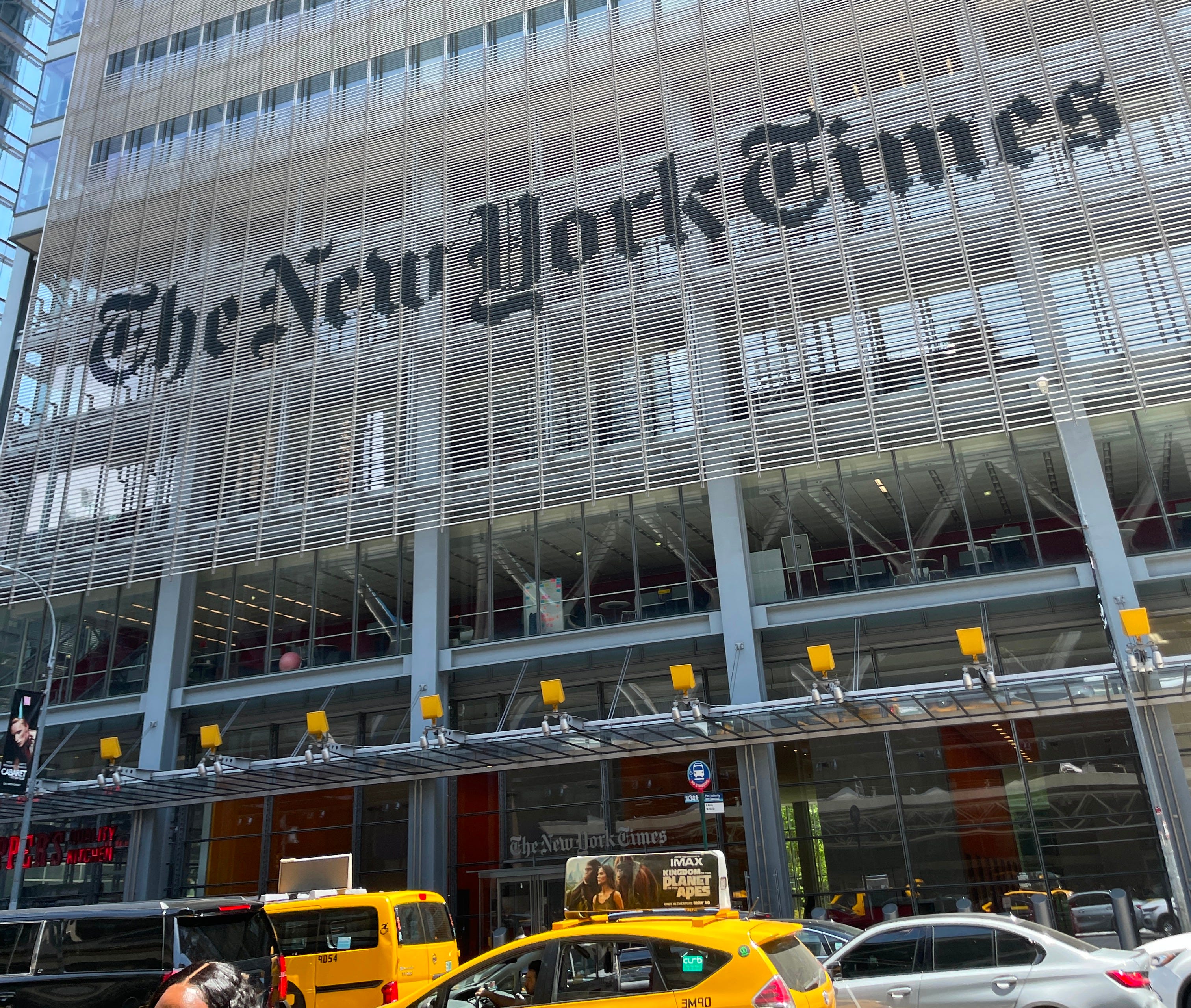
If this year belongs to anyone, for me, it’s the New York Times. Not to spoil the excitement but they feature three times on the upcoming list and I gave at least one NYT gift subscription this Christmas. I suspect this might be in part because one of my favourite moments of the year is spending a morning on the running loop in Central Park and in some ways I’ve been chasing a fraction of that feeling ever since. The feeling, I suppose, is being someone that gets to do that once, twice, five, seven times a week and then heads back to their apartment with a coffee and — let’s say it — a bagel, and sits down with the printed version of any one of these articles and spends the morning reading the long-form journalism that observes what I understand to be all the journalistic principles: accuracy, holding power to account, seeing through a story to its bitter end. In April I paid £20 for the NYT and now I am never lost for content from my commute crossword to the podcasts I listen to in the supermarket. And I think their digital journalism is of the highest quality, but I’ll bang on about that a bit later. I am comparatively nervous about UK media empires, partly because the grass is always greener, especially when it’s eighteen blocks from Central Park, and partly because the Observer has just been sold for seemingly no reason and the Sunday Times now comes wrapped in a double page advert and no one seems to be talking about it. This year was the year that I finished pretending to be a bona fide journalist who could write a news story but all the same, I learnt a lot about enhancing brands, staying ahead of the curve and how to reach readers and audiences for the first time, or to bring them back into the fold, and to my mind you see that in the NYT at every turn, while in the UK this sharp, clear identity seems to be slipping. That being said, it was borderline impossible to pick up a hard copy in Manhattan (but at Frankfurt airport the international edition is free and it still has the crossword in it).
These are the other things I’ve consumed this year, in all senses, that have resonated long past the point when I would reasonably have expected to have forgotten about an interview, a podcast episode or a meal that I cooked for myself.
All of Modern Love
I think it’s actually a privilege of dating (ultimately, there are few of these) to think about dating so much. It’s hard for people in relationships to get all the way into this because the evidence and experience that puts together one of these conversations is the stuff that is Not To Be Drawn On Anymore. And dating is like anything else fashionable, it shifts, it has trends – when you bow out, you lose touch. So I guess the one luxury is the Sex-and-the-City-ification of your own life, lofty theorising about what you might deserve and where you might find it, stepping outside with a sense of anticipation, just in case.
Modern Love certainly is not just about going on Hinge dates and it certainly is for everyone at all stages, that is precisely the point. But what it does is legitimise all experiences. It legitimises crushes on public transport and losing touch with someone you still think about and missed connections and eye contact in crowded pubs, because it legitimises love as a topic worth spending time with.
So often these stories are ultimately told from the end point perspective of loss and grief rather than the Sex and the City heady high of having a crush. They are usually, if not always, exquisitely written even by people who have no particular claim to being able to write. I loved the Andrew Garfield episode and cried in an airport security line when he cried — perhaps no surprise to anyone. The one I have thought about ever since I first heard it is “I married my subway crush” (December 2023).
I hope the many headlines are right and that Hinge dies in 2025, it being the enemy of actual connection with other people and symptomatic of our waning interest in going outside and living in the real world. And I hope that the casual Modern Love way of going about everything, with an open mind and a good skirt on whenever you want the chance to feel optimistic about things, is what we return to.
The Atlantic on students struggling to read books
I’ve thought about this article quite a lot since I read it, and I was thinking about these concerns quite a lot before I read it. I can’t stop thinking about what a privilege to be able to read well, not because of all the books, worlds, sentences you can inhabit — because sometimes television actually does that better, it’s not a one-way street to thorough immersion — but because you’re armed. It’s a defence. If you can read well, you can start to think critically. You’re less likely to be had. It’s not impossible, sure, but the way that fake news spreads just never ceases to surprise me, and that’s because people have been abandoned to their smallish worlds where no one takes responsibility for deciphering propaganda or satire on a large scale. And then that’s where the messes happen.
And everyone should have a base-level defence against being taken in like this, but for sure should humanities students at “elite” universities. Otherwise we really might as well give up the humanities (which they’re trying to do in UK schools again). Sometimes you have to defend this: it’s not a degree in reading as much as you can. It’s a degree in how words will work in your future — emails, adverts, contracts, theories, political campaigns. If it doesn’t achieve that then maybe there isn’t much point in teaching so many bright people with no clear plan a history of English literature from Chaucer to Dickens via Milton, because the point is not just to have read those things, even if some of them are very enjoyable and stay in your life long after you graduate.
NYT Best books of the 21st century list
I include this not as a list I particularly agree with (I had read, like, seven of these books, Siri Hustvedt was nowhere to be seen, it did nothing for me in that regard), but as a very impressive example of digital journalism that guided a lot of the things I thought about when putting my own journalism projects together this year. It’s guiding the presentation of this substack, for sure. It feels effortless, but there’s no doubt it was hard work to conceive of and, at a practical level, to code. The involvement of the reader — whether you’ve read the list, or whether you go through the list marking books you’d like to read down the line — is flawlessly executed. The ability to check in at the end with a newly formed reading list has been so influential to me that it changed the direction of my year of reading almost instantly (and indeed, now I have read nine of these books). It’s true that I’m usually an advertiser’s dream anyway, but it was exceptionally easy to identify myself with this article and that’s no mean feat from the NYT. Don’t get me started on how they used book covers to pull this off.
Sofia Coppola New Yorker profile
I am inserting this instead of waxing lyrical for four hours about why Marie Antoinette is a perfect film (she’s just a teenager! she’s just feeling everything that everyone feels at sixteen! when she and Louis get coronated to “Plainsong” by the Cure and walk down the steps at Versailles that is an exquisite moment of filmmaking! Total silence, a single tear down Kirsten Dunst’s cheek and then those first few twinkly notes of the song. Reverential.). This profile predominantly concentrates on the making of Priscilla but it touches on most of Coppola’s major films and also on growing up in a dynasty with a laser focus on one thing. The bit where she talks about being in The Godfather: Part III and it going terribly and this being a being a safe moment to learn about failure is so interesting. I like the characterizing of her work as “female characters who enjoy enormous privilege but little autonomy”. I think it’s another realm that could do with a bit of legitimising, not unlike subway crushes and Taylor Swift, because just because things happen to teenage girls doesn’t mean they aren’t very real phenomena that deserve to be represented in high quality art. Everyone else has talked about girlhood all year, and I have also thought about it’s strengths, and about the dangers of leaning into it, all year. I guess this is my one contribution to that discourse.
To be honest, I’d read anything Rachel Syme wrote and I’m just lucky that she has precisely the same interests as me (see also: Sarah Jessica Parker, Lena Dunham).
NYT pasta alla vodka recipe lol
My favourite things to cook are sauces that cohere in the pan and all of a sudden the work is done. I’m much less interested in several roasting tins in the oven, I’d rather see the magic of the moment when it all comes together (I would also rather only use one pan if possible). When I’m feeling brave, I like to cook carbonara (eggs, no cream) which is perhaps the ultimate of these experiences: when it comes down to it, the meal is made (or broken) in seconds. Pasta alla vodka is another such cooking moment.
I like this because it is indulgent. Because your weeknight dinner should have vodka in every now and then. Because it contains cream for no reason except to make it taste better. Because I am often cooking for one in the Michele Roberts tradition of embracing the opportunity to make it just a little bit decadent. On this one, I suspect any recipe would do it, and in fact with some others you wouldn’t have to do the calculation “3/4 of a cup in ml” every time. All the same, it’s recipes like these that make the idea of a Saturday night in in your tracksuit bottoms with a bag of bougie crisps (Torres truffle flavour, this is north London after all) to snack on and a glass of wine from your wine box seem as good as any night out you could go on. But it takes no more effort to make it for six and that feels like quite a good philosophy to live by.
Finally: Getting an oat flat white every morning
I didn’t drink coffee through school, through university, through my job as a hotel receptionist. I never wanted to feel that I couldn’t do anything without it and besides, I’ve been drinking white tea for ten years and I buy it in such large quantities that I currently have twelve boxes to get through. What I didn’t know about getting an oat flat white every morning is that it’s an activity. It costs three pounds (maybe sometimes more like four) to do one thing that sets up your day to be a little better than before. I drink it on my walk to the station, before the city is anything like a city, it’s much leafier. I get up and get an oat flat white on almost all Saturdays and Sundays, and then on most of them I walk for an hour, on the phone to my mum or listening to one of the many podcasts listed or not listed here. Sometimes I take my oat flat white to a park and read one of the books that rearranged my entire world. Perhaps one day I’ll look back on all my oat flat whites and think “I could have bought a house”. But you have to live all of the days in between as well, and getting an oat flat white, buying a book in hardback the day it’s released, thinking that having a tinny on the bus home after work on a Friday in the summer is an “evening” — these things help make that possible.